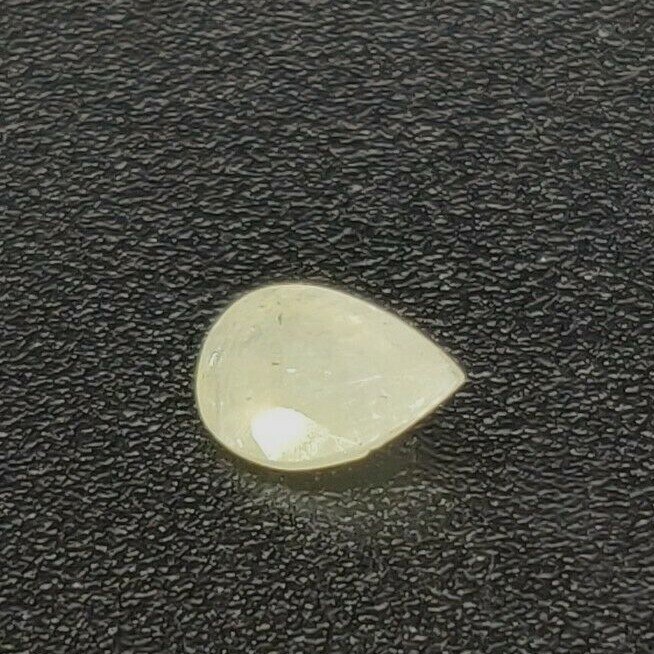
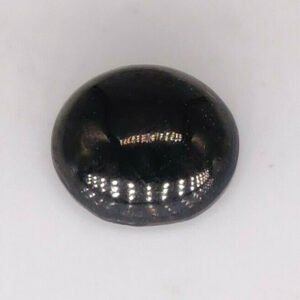
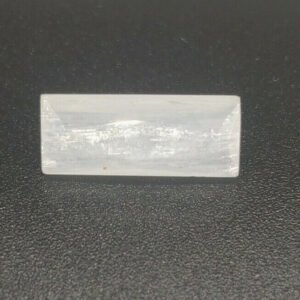
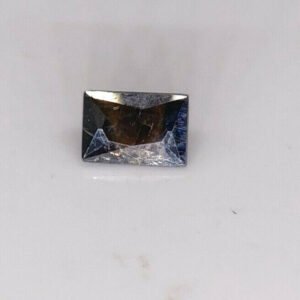
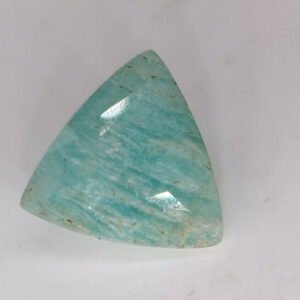
Adamite
Adamite represents the “neon-vibrance” of the secondary zinc world. A zinc arsenate hydroxide, it is a species I have always respected for its “liquid” luster and its extraordinary presence in the mineral cabinet. While it can occur in shades of “honey-yellow” or “sky-blue” (when copper is present), the definitive Adamite is a brilliant, “lime-green” that feels almost synthetic in its intensity. For the specialist, Adamite is a prize of hydrothermal transformation; it forms in the oxidation zones of zinc-rich ore deposits, often creating “fan-like” or globular clusters that shimmer with a sub-adamantine to vitreous luster. It is a stone of “electric growth,” providing a sophisticated, high-saturation aesthetic that makes it a true “visual powerhouse” for the systematic vault.
The Heritage & Discovery
Historical Significance: Adamite is a vital species for understanding the complex chemistry of “supergene” oxidation zones. Historically, it was a rare discovery that captivated early mineralogists with its sharp, orthorhombic symmetry and its remarkable response to ultraviolet light. In the world of fine minerals, it is celebrated as one of the most iconic species from the legendary mines of Mexico. It stands as a symbol of rejuvenation and chemical diversity, bridging the gap between heavy metal ores and the elite world of “neon” collector gems. It serves as a reminder that within the “rust” of an old mine, nature can crystallize a color so vibrant it feels like captured sunlight.
Discovery: The mineral was formally named in 1866 by Charles Friedel in honor of Gilbert-Joseph Adam (1795–1881), a prominent French mineralogist who provided the first specimens for study. Scientifically, it is a zinc arsenate. Its discovery in the Chañarcillo region of Chile provided mineralogists with the first clear look at how arsenic and zinc interact in the presence of water to create stable, highly-ordered lattices. My own respect for this material grew from observing its “adamantine” surface; even in massive forms, the way the light dances off the crystal terminations is exceptionally sharp, a trait that gave the mineral its name (derived from “adamantine”).
Important Mines: The undisputed world capital for the finest, “neon-green” Adamite is the Ojuela Mine in Mapimí, Durango, Mexico. These specimens, often perched on a contrasting dark “Limonite” matrix, set the global benchmark for color and morphology. I also have a high regard for the spectacular “cobalt-blue” varieties from Laurium, Greece, and the rare, sharp crystals from the Tsumeb Mine in Namibia. For the vault, I prioritize the Ojuela material for its unmatched fluorescence and the Greek pieces for their rare and “ethereal” color shifts.
Mineralogical Profile
Description: Adamite is a zinc arsenate hydroxide that crystallizes in the orthorhombic system. It sits at a 3.5 on the Mohs scale, making it a relatively soft mineral that requires a delicate touch and a stable environment to prevent damage to its brittle crystal fans. It is characterized by its vitreous to sub-adamantine luster and its unmistakable “citrus” color palette.
One of its most identifying traits is its strong green fluorescence under short-wave ultraviolet light, caused by the presence of uranyl ions. It has a high refractive index ($n \approx 1.70$ to 1.77) and a significant specific gravity ($SG \approx 4.3$ to 4.5), which gives it a “solid” feel in the hand. Because it is a secondary mineral, it is often found in association with Smithsonite, Hemimorphite, and Limonite. When I select a piece for the collection, I look for “razor-sharp” terminations and a lack of surface “bruising,” as these highlight the sophisticated, three-dimensional geometry of the mineral’s growth. It is a dense, high-vibration mineral that offers a unique, “electric” beauty unlike any other arsenate species.
Chemical Formula: Zn2(AsO4)(OH)