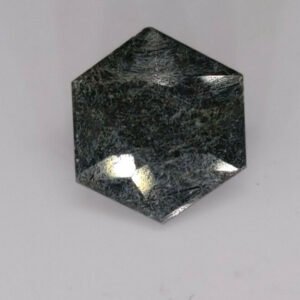
Anatase
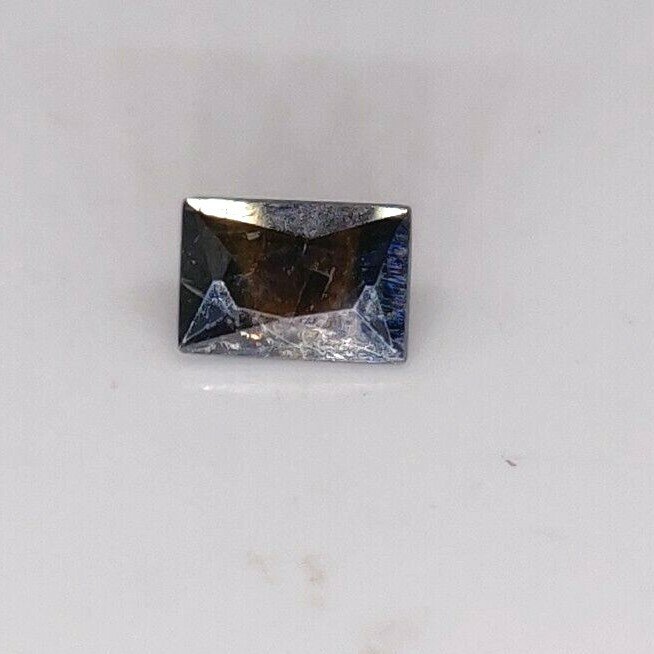
Anatase represents the “sharp and structural” titan of the oxide world. A titanium dioxide polymorph, it is a species I have always respected for its “steely” brilliance and its high-energy, dipyramidal crystal habit. For the specialist, Anatase is a prize of optical power; with a refractive index that significantly exceeds that of Diamond, it possesses a “fire” and a sub-adamantine luster that can be truly blinding when the light hits a clean face. It typically presents as “indigo-blue,” “honey-yellow,” or a stark, “inky” black. It is a stone of “condensed focus,” providing a sophisticated, geometric aesthetic that makes it an essential “high-vibration” asset for the systematic vault.
The Heritage & Discovery
Historical Significance: Anatase is one of the three naturally occurring forms of titanium dioxide, alongside Rutile and Brookite. Historically, it was often confused with other dark oxides until its formal distinction in the late 18th century. In the world of fine minerals, it is celebrated for its extraordinary “internal” glow, particularly in the deep blue specimens from the Alps. It stands as a symbol of structural diversity, bridging the gap between common industrial titanium ores and the elite world of “micro-gem” collector rarities. It serves as a reminder that the same chemical formula can manifest in vastly different symmetries, each with its own unique “soul.”
Discovery: The mineral was formally named in 1801 by René Just Haüy, the father of modern crystallography. The name is derived from the Greek anatasis, meaning “extension,” in reference to its elongated dipyramidal crystals compared to other isometric minerals. Scientifically, it is a titanium oxide that often forms as a secondary mineral from the alteration of other titanium-bearing species. My own respect for this material grew from observing its “adamantine” surface; the way it reflects light is so sharp it feels metallic, yet it retains a crystalline transparency that is a hallmark of the finest alpine “fissure” minerals.
Important Mines: The undisputed world capital for the finest, most aesthetic “indigo” Anatase is the Hardangervidda region in Norway. I also have a high regard for the world-class, “honey-colored” crystals from Minas Gerais, Brazil, and the legendary, sharp specimens from the Alps (particularly Binn Valley, Switzerland and Oisans, France). For the vault, I prioritize the Norwegian material for its unmatched color depth and the Brazilian pieces for their exceptional size and “gemmy” clarity.
Mineralogical Profile
Description: Anatase is a titanium oxide that crystallizes in the tetragonal system. It sits at a 5.5 to 6 on the Mohs scale, making it a relatively durable mineral, though its perfect cleavage requires a delicate touch. It is characterized by its sub-adamantine to metallic luster and its unmistakable “sharp-edged” dipyramidal form.
One of its most identifying traits is its extreme refractive index ($n \approx 2.48$ to $2.56$), which is higher than Diamond ($n \approx 2.42$). This gives even small crystals an incredible “sparkle” and presence. It has a specific gravity ($SG \approx 3.8$ to 4.0) and a characteristic uniaxial negative optical sign. Because it is a product of hydrothermal activity, it is often found in association with Quartz, Adularia, and Rutile. When I select a piece for the collection, I look for “razor-sharp” dipyramids and a lack of surface “etching,” as these highlight the sophisticated, three-dimensional geometry that makes Anatase a standout for the systematic specialist. It is a dense, high-vibration mineral that offers a unique, “steely” beauty unlike any other oxide species.
Chemical Formula: TiO2