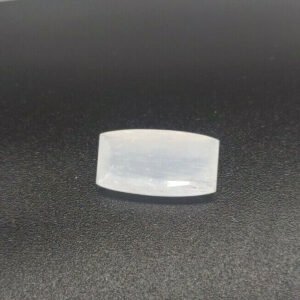
Bakerite
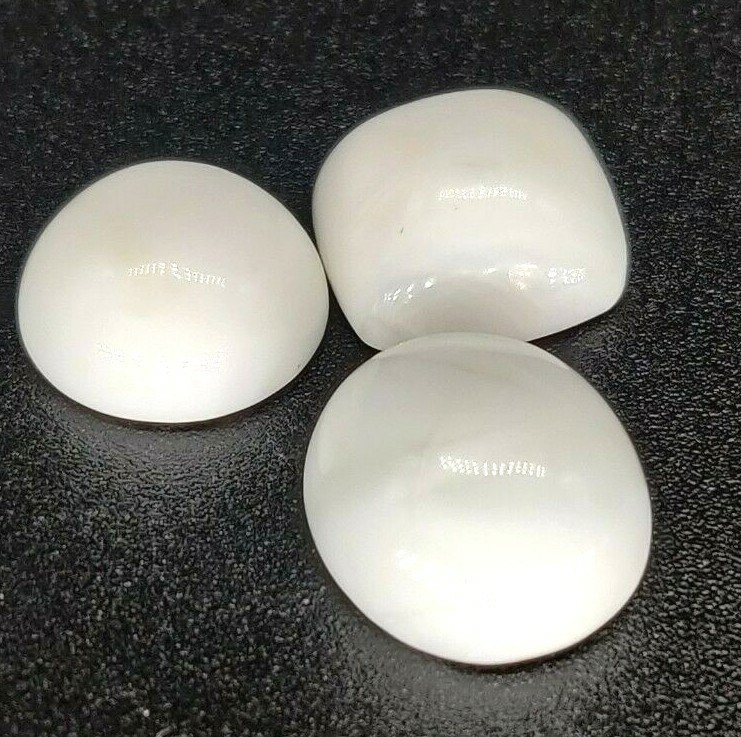
Bakerite represents the “porcelain” sophistication of the calcium borosilicate world. A hydrated borosilicate hydroxide, it is a species I have always respected for its understated, “bone-white” elegance and its unique role in the mineralogy of desert borate deposits. It typically presents as smooth, nodular masses or “cauliflower” clusters with a dull to sub-vitreous luster, often resembling fine unglazed pottery. For the specialist, Bakerite is a prize of chemical concentration; it is a structural relative of Gadolinite and Datolite, but with a purity of form that feels remarkably grounded. It is a stone of “crystalline calm,” providing a sophisticated, “ceramic” aesthetic that makes it a true “scientist’s choice” for the systematic vault.
The Heritage & Discovery
Historical Significance: Bakerite is a vital species for understanding the complex interaction between boron-rich fluids and silicate rocks in arid environments. Historically, it was a rare discovery in the early 20th century, emerging from the rugged, “baked” hills of the Mojave Desert. In the world of fine minerals, it is celebrated for its compact, microcrystalline habit. It stands as a symbol of resilience and structural integrity, bridging the gap between common borates and the elite world of “rare-earth” silicates. It serves as a reminder that the most “monochrome” minerals in nature often harbor the most stable and balanced chemical structures.
Discovery: The mineral was formally named in 1903 in honor of Richard C. Baker, a prominent figure in the early California borax industry and a director of the Pacific Coast Borax Company. Scientifically, it is a calcium borosilicate hydroxide. Its discovery in the Death Valley region provided mineralogists with the first clear look at this specific borosilicate arrangement, helping to map the chemical evolution of the world’s most productive borate basins. Since its identification, it has become a staple for collectors who appreciate the “soft” aesthetics of the borate group.
Important Mines: The undisputed world capital for the finest, most aesthetic Bakerite nodules is the Corkscrew Canyon Mine and the Boraxo Mine in Death Valley, Inyo County, California, USA. These American specimens set the global standard for size and “pottery-like” texture. I also have a high regard for the rare, “gemmy” occurrences found in Hesse, Germany, and the Arakawa Mine in Japan. For the vault, I prioritize the Death Valley material for its unmatched historical pedigree and its characteristic “snow-white” purity.
Mineralogical Profile
Description: Bakerite is a calcium borosilicate that crystallizes in the monoclinic system, though it is almost exclusively found in its “massive” or nodular state. It sits at a 4.5 on the Mohs scale, making it a relatively soft mineral—similar to Fluorite—that requires careful handling to preserve its smooth, matte surfaces. It is characterized by its dull to vitreous luster and its range from pure white to a soft, “creamy” yellow.
One of its most identifying traits is its conchoidal to uneven fracture, which gives broken surfaces a “shell-like” appearance similar to flint or glass. It has a moderate refractive index ($n \approx 1.62$ to 1.65) and a characteristic “solid” specific gravity ($SG \approx 2.7$ to 2.9). Because it is a product of hydrothermal activity in borate-rich environments, it is often found in association with Priceite, Howlite, and Colemanite. When I select a piece for the collection, I look for “even” color distribution and a lack of surface staining, as these highlight the sophisticated, three-dimensional geometry of the mineral’s growth. It is a light, high-vibration mineral that offers a unique, “architectural” beauty unlike any other borosilicate species.
Chemical Formula: Ca4B4(BO4)(SiO4)3(OH)3·H2O