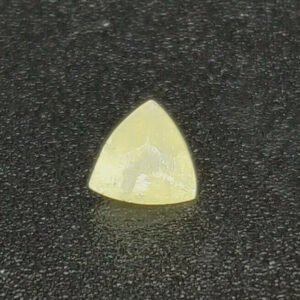
Quartz with Rare Mineral Inclusions
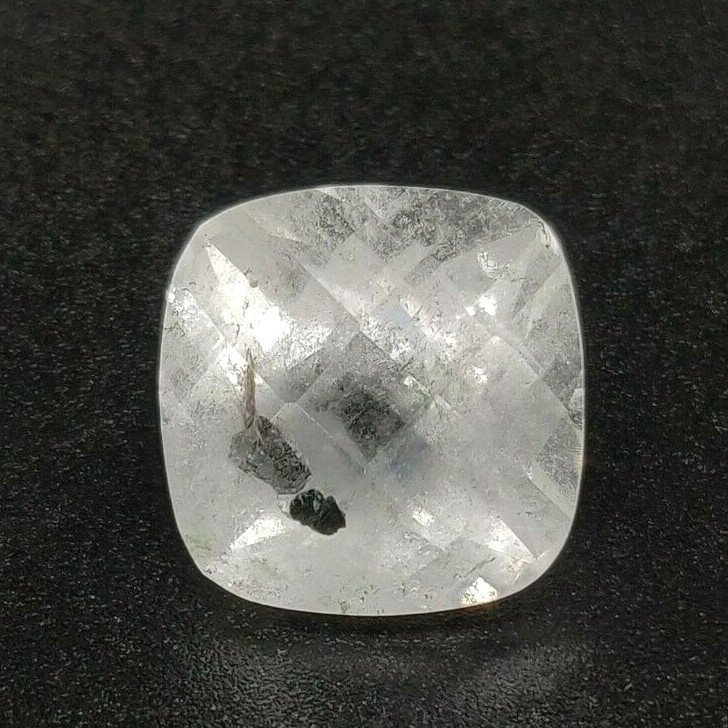
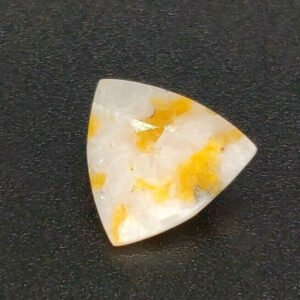
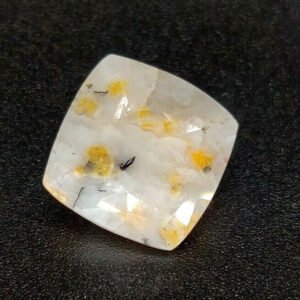
Quartz is the “eternal canvas” of the mineral world, but for the specialist collector, the true intrigue lies within its depths. I have always been fascinated by Quartz that has “trapped” other minerals during its growth—creating a time capsule of geological action. Whether it is Fluorite appearing as floating, colorful phantoms or Diopside showing as vibrant, green “grass” needles, these inclusions turn a common mineral into a unique masterpiece. I have some pieces with unidentified inclusions that are particularly interesting; they challenge our understanding and offer a sense of discovery that you simply don’t get with “clean” stones. For the collector who prizes the “odd” and the “impossible,” these inclusions are the ultimate fingerprint of a stone’s journey through the Earth’s crust.
The Heritage & Discovery
Historical Significance: Included Quartz, often referred to as “Saganite” or “Medusa Quartz” depending on the inclusion, has been a subject of wonder for centuries. Historically, these stones were often viewed as mystical, with the inclusions thought to be trapped lightning or hair from the gods. In the world of fine minerals, they represent a high-level study in paragenesis—the sequence in which minerals crystallize together. They stand as a testament to the “messy” and beautiful reality of hydrothermal veins, where multiple elements compete for space, resulting in one mineral being swallowed by another.
Discovery: The study of “Inclusion Chemistry” was refined in the 20th century, allowing gemologists to identify specific minerals like Fluorite or Diopside within a Quartz host using Raman spectroscopy. This “internal mapping” has revealed that many inclusions we once thought were one thing are actually rare species entirely. Each new discovery in a Quartz vug—from the mountains of Brazil to the peaks of the Himalayas—adds a new line to the story of how our planet’s crust evolves.
Important Mines: The most legendary source for diverse and spectacular inclusions is Minas Gerais, Brazil. However, for Diopside in Quartz, I have a high regard for material from Madagascar and the Urals. For Fluorite inclusions, the finds in Madagascar and China are world-class. For the vault, I prioritize pieces where the inclusions are “suspended” in water-clear Quartz, as this allows the specialist to study the geometry of the trapped mineral without distortion.
Mineralogical Profile
Description: Included Quartz is macrocrystalline Quartz (silicon dioxide) containing visible crystals of other mineral species. It sits at a 7 on the Mohs scale, though the durability can be affected by the nature of the inclusions. It is characterized by its vitreous luster and the “window” it provides into the interior world.
One of its most identifying traits is the crystal habit of the inclusion. Fluorite inclusions often appear as perfect octahedra or cubes, while Diopside typically forms as prismatic, “chrome-green” needles or “sunburst” aggregates. It has a refractive index ($n \approx 1.54$ to $1.55$). When the inclusions are unidentified, they often present as metallic “specks,” fibrous “hairs,” or even “fluid bubbles” (enhydros). When I facet or polish these, I always “face” the stone to highlight the most dramatic inclusion, ensuring that the “guest” mineral is the star of the show. It is a dense, storytelling mineral that offers an infinite variety of internal landscapes for the patient observer.
Chemical Formula: SiO2 (Host) + Inclusions (e.g., CaMgSi2O6 for Diopside / CaF2 for Fluorite)