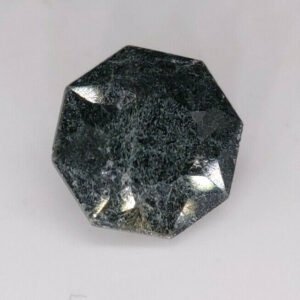
Apache Hickoryite
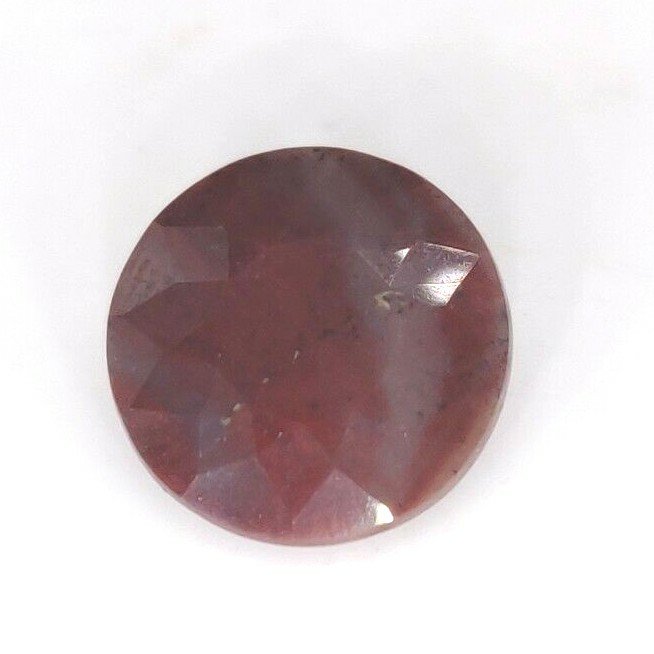
I’ve always had a soft spot for the name of this material, but it was at a Tucson Gemstone Fair where I found some truly exceptional rough from Mexico that I couldn’t walk away from. While most people see the woody banding and immediately think of cutting cabochons, I knew there was more potential hidden inside. I had to pick up that rough specifically to see if we could pull out something more sophisticated—properly faceted gems that show off those “autumn” patterns in a way you just don’t see in standard lapidary work.
The Heritage & Discovery
Historical Significance: Apache Hickoryite is a rhyolitic wonder that earned its name from its uncanny resemblance to the grain of hickory wood. It has long been a favorite for lapidaries who appreciate the “earth-tone” palette, often referred to as “Rainbow” or “Autumn” Hickoryite due to its warm, banded appearance.
Discovery: As a variety of rhyolite, its history is tied to the volcanic activity of the American Southwest and Northern Mexico. It isn’t a “new” discovery in the mineralogical sense, but it remains a niche favorite for those who prefer the complex patterns of volcanic glass and stone over uniform colors.
Important Mines: The most coveted material typically emerges from the volcanic fields of Durango, Mexico, though notable deposits also exist in Arizona. The Mexican rough is particularly known for the tight, high-contrast banding that makes it suitable for the experimental faceting I’ve been exploring.
Mineralogical Profile
Description: This is a fine-grained, silica-rich volcanic rock. Because it is a rock (a mineral aggregate) rather than a single crystal species, it presents a unique challenge for the faceter. It features a stunning array of red, pink, yellow, and tan bands formed by the flow of lava and the presence of various iron oxides. While it shares a volcanic origin with the “Apache Tear,” Hickoryite is not a glass but a felsic igneous rock with a matte-to-vitreous luster when polished.
Chemical Formula: Roughly 70% to 75% SiO2 with varying amounts of Al2O3, K2O, and Na2O