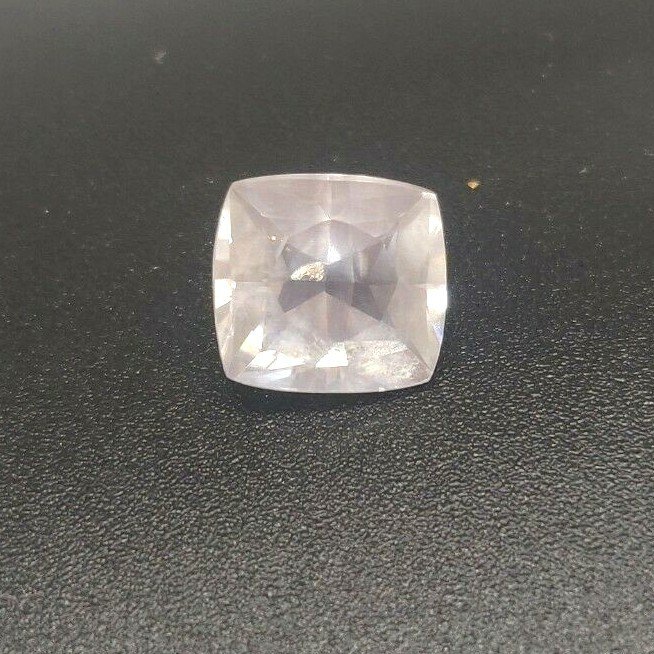
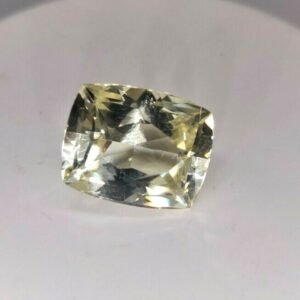
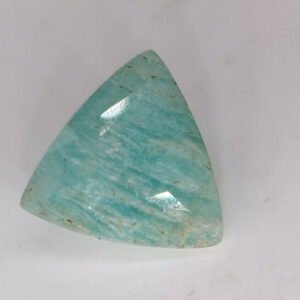
Spodumene (Triphane)
Spodumene is a mineral that leads a fascinating double life, bridging the gap between high-tech industrial utility and high-end gemstone beauty. While it is a major ore of lithium—the silent engine powering our modern world—it also produces some of the most enchanting and delicate transparent crystals in the mineral kingdom. I have always found Spodumene to be a “connoisseur’s gem”; it requires an expert hand to cut because of its perfect cleavage, but the reward is a stone with a soft, vitreous luster and a remarkable clarity. Whether it is the soft lilac of Kunzite or the rare, understated elegance of Triphane, Spodumene is a stone that captures the quiet, sophisticated power of the pegmatite world.
The Heritage & Discovery
Historical Significance: Spodumene was first identified in 1800 by the Brazilian naturalist José Bonifácio de Andrada e Silva. The name comes from the Greek spodumenos, meaning “burnt to ash,” a nod to the opaque, ashy appearance of the first industrial-grade specimens. However, you are absolutely correct to ask about Triphane. In 1801, the famous French mineralogist René Just Haüy proposed “Triphane” (meaning “three appearances” or “appearing threefold”) as a replacement name, referring to its distinct three planes of cleavage. While “Spodumene” eventually won out as the official mineral species name, “Triphane” remains a highly respected trade term for the colorless to light-yellow varieties.
Discovery: The gem varieties of Spodumene were a relatively late discovery in mineralogical history. While the mineral itself was known as a lithium source, it wasn’t until the late 19th and early 20th centuries that the vibrant, transparent varieties like Kunzite (named after George Frederick Kunz) and Hiddenite (named after William Earl Hidden) were recognized. Triphane has been used as a synonym for over a century, particularly in European and French literature, and it continues to be the preferred name for yellow specimens in specialized collections.
Important Mines: Some of the most spectacular gem-quality Spodumene comes from the Nuristan and Kunar regions of Afghanistan, which produce massive, perfectly terminated crystals. Minas Gerais in Brazil is another legendary source, particularly for the golden-yellow Triphane. Historically, the Black Hills of South Dakota were famous for producing giant, industrial-grade Spodumene crystals—some measuring over 14 meters long—though these lacked the transparency required for the faceted gems we prize.
Mineralogical Profile
Description: Spodumene is a lithium aluminum silicate and a prominent member of the pyroxene group. It sits at a 6.5 to 7 on the Mohs scale, making it durable for jewelry, though its perfect cleavage in two directions means it must be worn with care. It is famous for its strong pleochroism—the ability to show different colors when viewed from different angles. When faceted as Triphane, the stone exhibits a luminous, “daytime” brightness that excels in natural light.
Chemical Formula: LiAlSi2O6