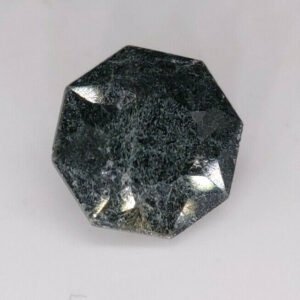
strong>Anhydrite
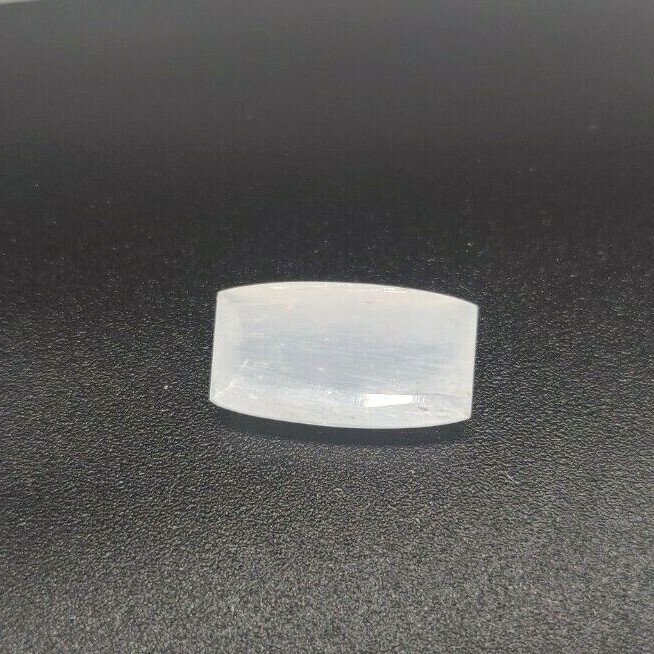
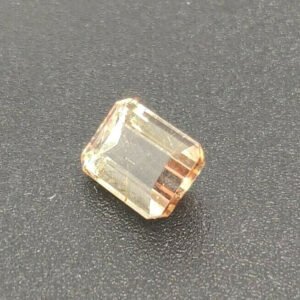
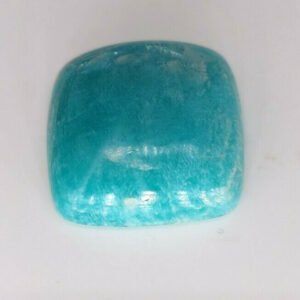
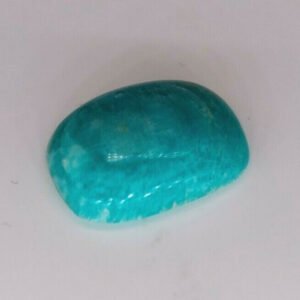
Anhydrite represents the “unyielding dry” heart of the sulfate world. A calcium sulfate, it is a mineral I have always respected for its relationship with its cousin, Gypsum; while Gypsum holds water in its lattice, Anhydrite is defined by its absolute lack of it. It typically presents in shades of “sky-blue,” “lilac,” or “pearly white,” often forming dense, “sugary” masses or sharp, orthorhombic crystals. In the trade, the soft blue variety is famously known as “Angelite.” For the specialist, Anhydrite is a prize of structural stability; it offers a sub-adamantine to pearly luster and a “heavy” presence that makes it a true “pillar of the earth” for the systematic vault.
The Heritage & Discovery
Historical Significance: Anhydrite is a vital mineral for understanding the evaporation history of ancient seas. Historically, it was used in industrial applications, but for the connoisseur, it is celebrated for its “celestial” blue variety that has gained immense popularity in the lapidary world. In the world of fine minerals, it is valued for its three directions of perfect cleavage, which intersect at 90 degrees, earning it the name “cube spar” among early miners. It stands as a symbol of grounding and structural focus, bridging the gap between common evaporite rocks and the elite world of “tranquil” color-saturated collector gems. It serves as a reminder that nature can create a stone that feels as light as the sky despite its dense, solid-state chemistry.
Discovery: The name is derived from the Greek anhydros, meaning “without water,” a reference to its chemical composition. It was formally named in 1804 by Abraham Gottlob Werner. Scientifically, it is a calcium sulfate. Its discovery in the Salzburg region of Austria provided mineralogists with the first clear look at how sulfates crystallize in the absence of hydration. My own respect for this material grew from observing its transformation; when exposed to water in natural settings, it can slowly expand and turn back into Gypsum, making a well-preserved, dry Anhydrite crystal a testament to geological protection.
Important Mines: The undisputed world capital for the finest “sky-blue” Angelite material is the Naica Mine in Chihuahua, Mexico, and the Lima Province in Peru. I also have a high regard for the spectacular, large crystals found in the Simplon Tunnel in Switzerland and the historic evaporite deposits of Wieliczka, Poland. For the vault, I prioritize the Peruvian material for its unmatched “baby-blue” saturation and the Swiss pieces for their superior crystal morphology.
Mineralogical Profile
Description: Anhydrite is a calcium sulfate that crystallizes in the orthorhombic system. It sits at a 3.5 on the Mohs scale, making it a soft mineral that requires careful handling to avoid splitting along its perfect cleavage planes. It is characterized by its vitreous to pearly luster and its unmistakable “serene” color palette.
One of its most identifying traits is its triple cleavage at right angles, which allows it to break into perfect rectangular or cubic fragments. It has a moderate refractive index ($n \approx 1.57$ to 1.61) and a specific gravity ($SG \approx 2.9$ to 3.0), which makes it feel notably heavier than common Gypsum ($SG \approx 2.3$). Because it is an evaporite mineral, it is often found in association with Halite, Sylvite, and Gypsum. When I select a piece for the collection, I look for “even” color distribution and a “velvety” surface texture, as these highlight the sophisticated, three-dimensional geometry of the mineral’s growth. It is a dense, high-vibration mineral that offers a unique, “aerial” beauty unlike any other sulfate species.
Chemical Formula: CaSO4